Transportation & Logistics
Masar
Platform
Simplifying control through data and predictive intelligence. Unifying fleet command across web and mobile to automate dispatch, predict breakdowns, and streamline compliance.
One platform, complete control.
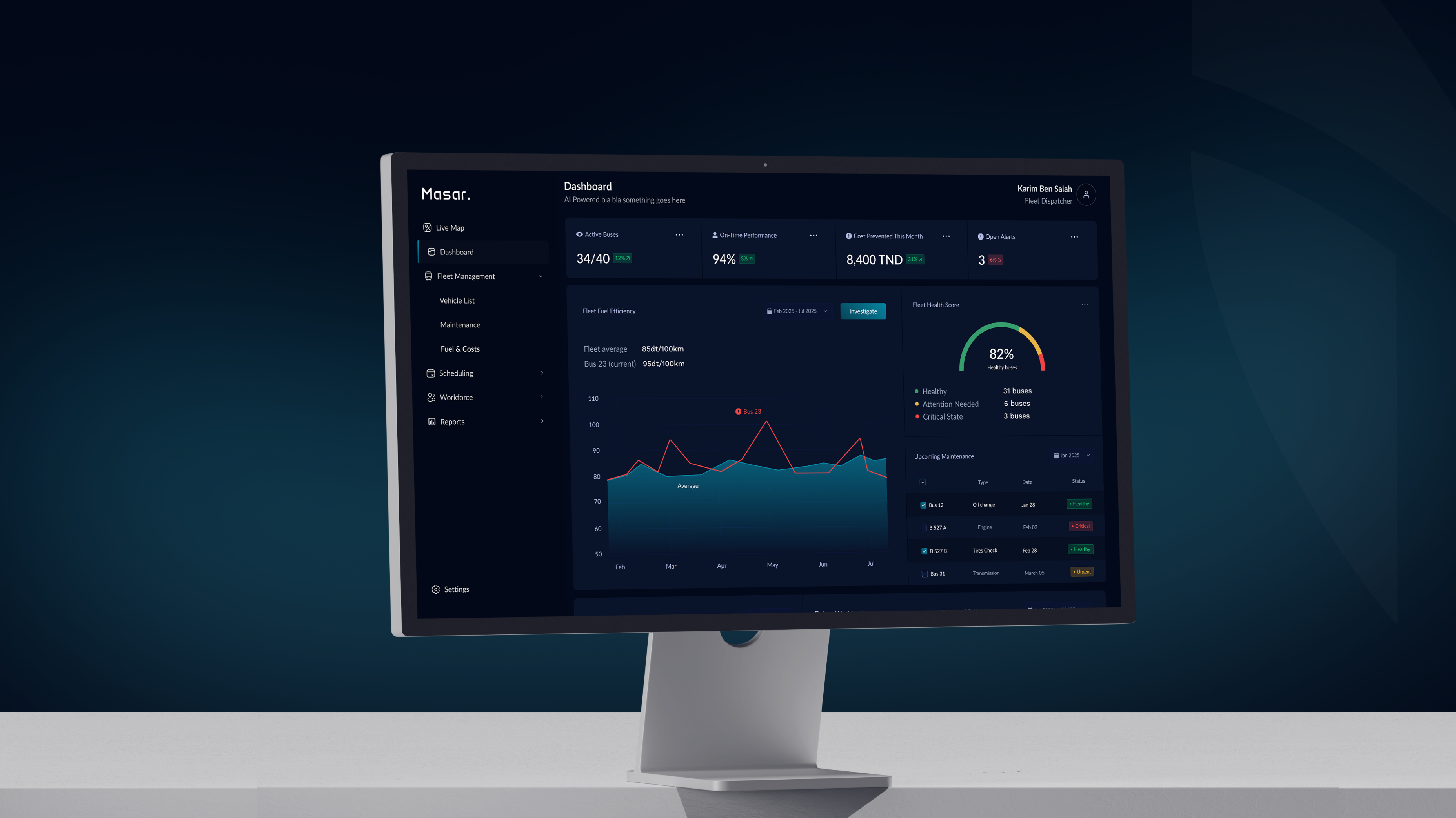
Masar unifies fleet command across web and mobile, bridging the gap between dispatchers at HQ and drivers on the road.
Designed specifically for the constraints of Tunisian operators, Masar focuses on predicting breakdowns, automating dispatch decisions, and streamline regulatory compliance. Dispatchers command from a powerful dashboard, while drivers execute seamlessly from the road.
The Cost of Operational Blindness
23%
Operational Hours Lost to Preventable Chaos
Unexpected Breakdowns
Buses failing on highways cause cascading revenue drops and stranded passengers.
Fuel Theft & Leakage
Blind spots in tracking bleed funds through undetected theft and inefficiencies.
Scheduling Conflicts
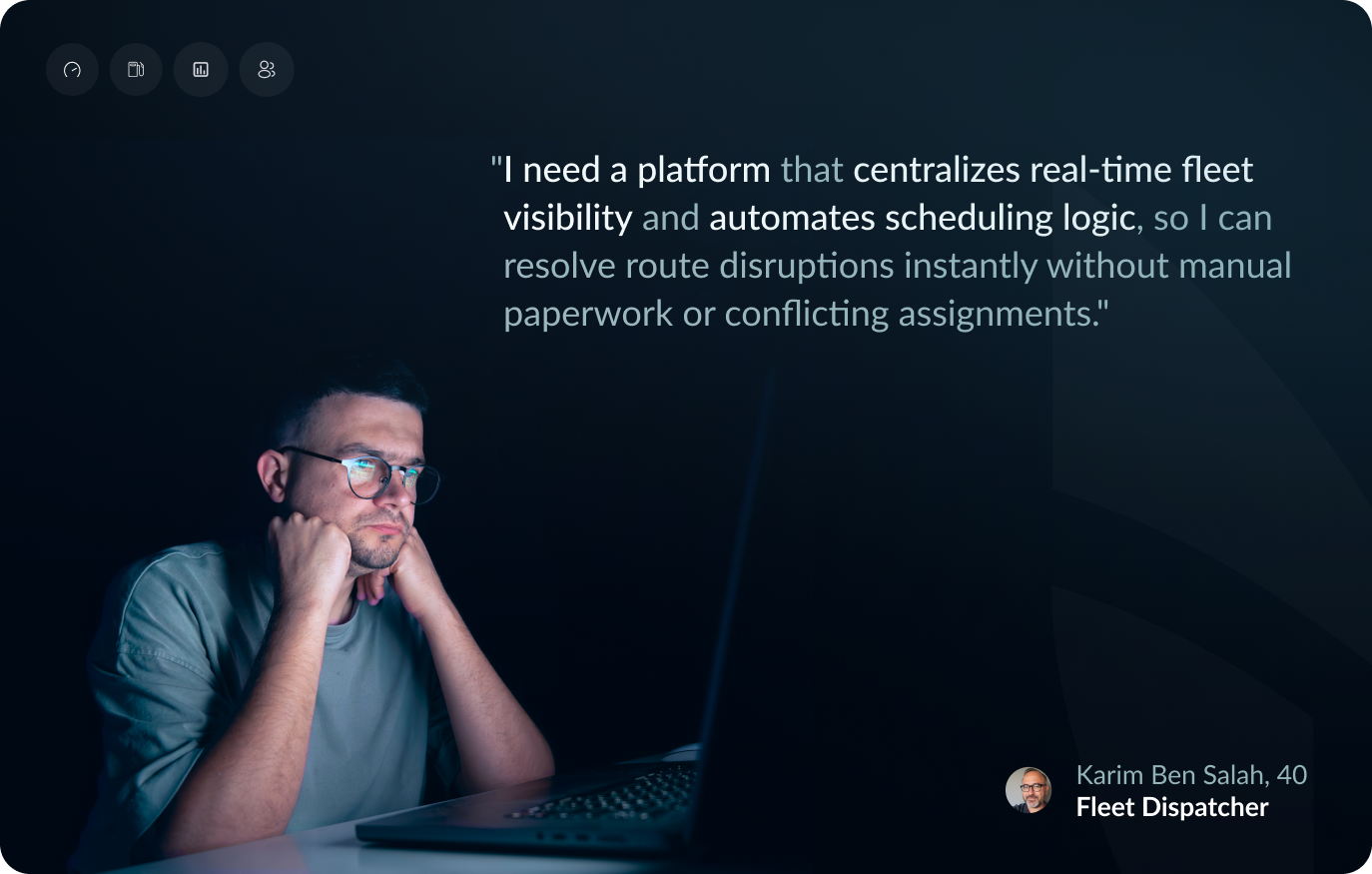
Dispatchers hold 40+ complex schedules in their heads, breaking down under pressure.
Proactive Control Architecture
We built a centralized platform providing AI-powered foresight, real-time coordination, and transparent cost control.
Masar (SaaS Web App)
A fleet command platform that transforms reactive chaos into proactive control. It predicts breakdowns, automates dispatch decisions, and streamlines compliance without the paperwork burden.
Masar Go (Driver App)
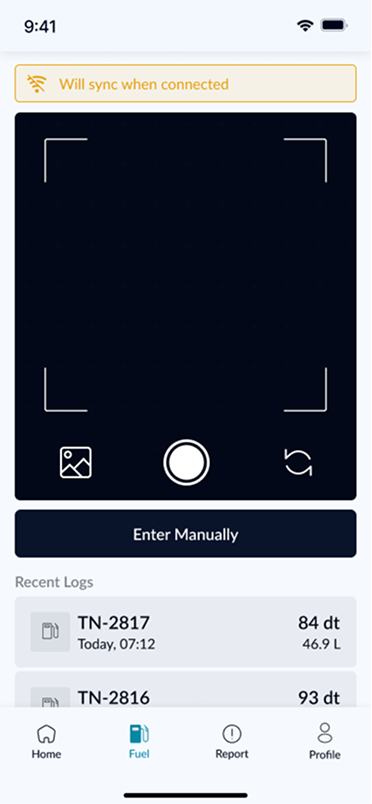
A companion app that puts fleet control in drivers' hands. It allows them to start shifts with confidence, log fuel offline, and report emergencies in seconds. Designed for dead zones and gloves.
Designed for the Real Teams
Systematic Operational Rhythms
By mapping the dispatcher's day, we transformed complex, multi-channel scrambles into streamlined digital operations. Here are two critical daily workflows.
Morning Dispatch
From API / Spreadsheet
Detect driver availability
Fix errors, finalize shifts
Push to Drivers App
Crisis Response
Engine Failure detected
Find replacement bus
Confirm transfer data
Push to new Driver
Log system change
Intent-Based Navigation
Instead of organizing by technical modules, the IA is structured strictly by Operational Rhythm—matching exactly how a dispatcher views their day from high-level mapping down to granular reporting.
Live Operations
Fleet Map, Alert Feed, Active Trips
Dashboard
High-level Metrics, KPIs
Fleet Directory
Vehicles, Maintenance, Fuel & Costs
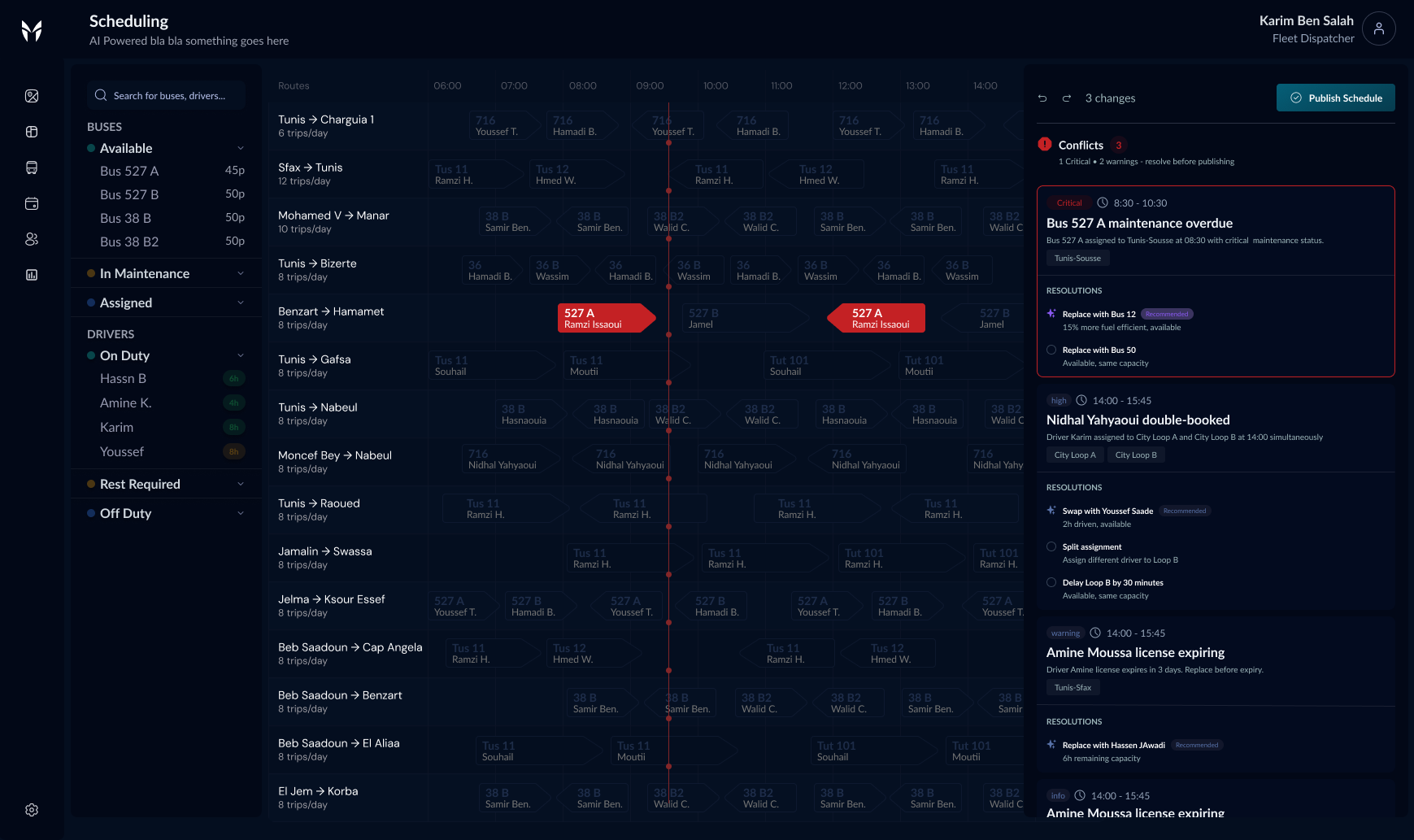
Scheduling
Daily Dispatch, Route Planning
Workforce
Drivers, Shifts, Performance
Reports
Operations, Cost Analytics, Compliance
Translating Complexity into Action
The command center replaces fragmented spreadsheets and panicked phone calls, presenting critical data when it matters most. Below is a full desktop experience breakdown.
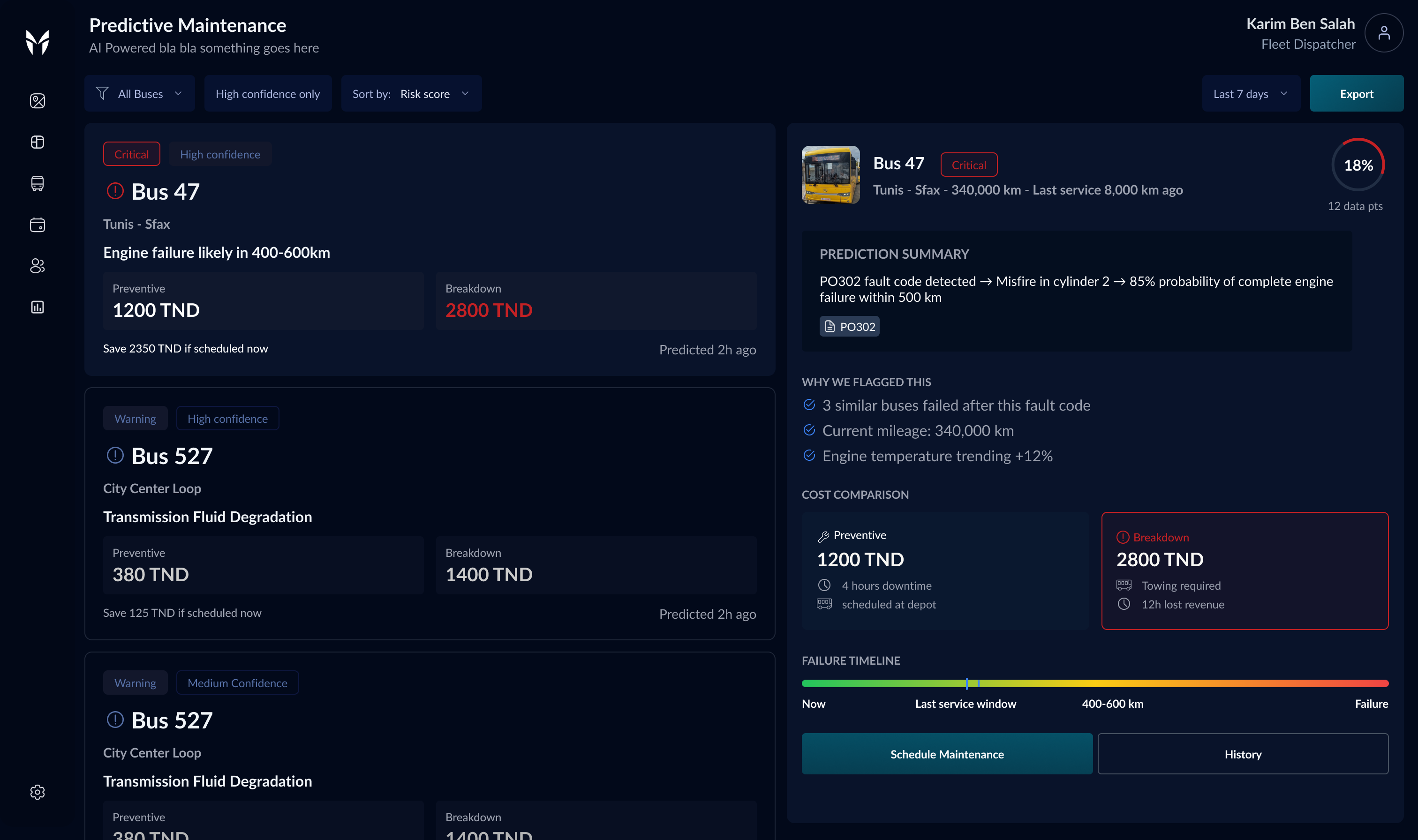
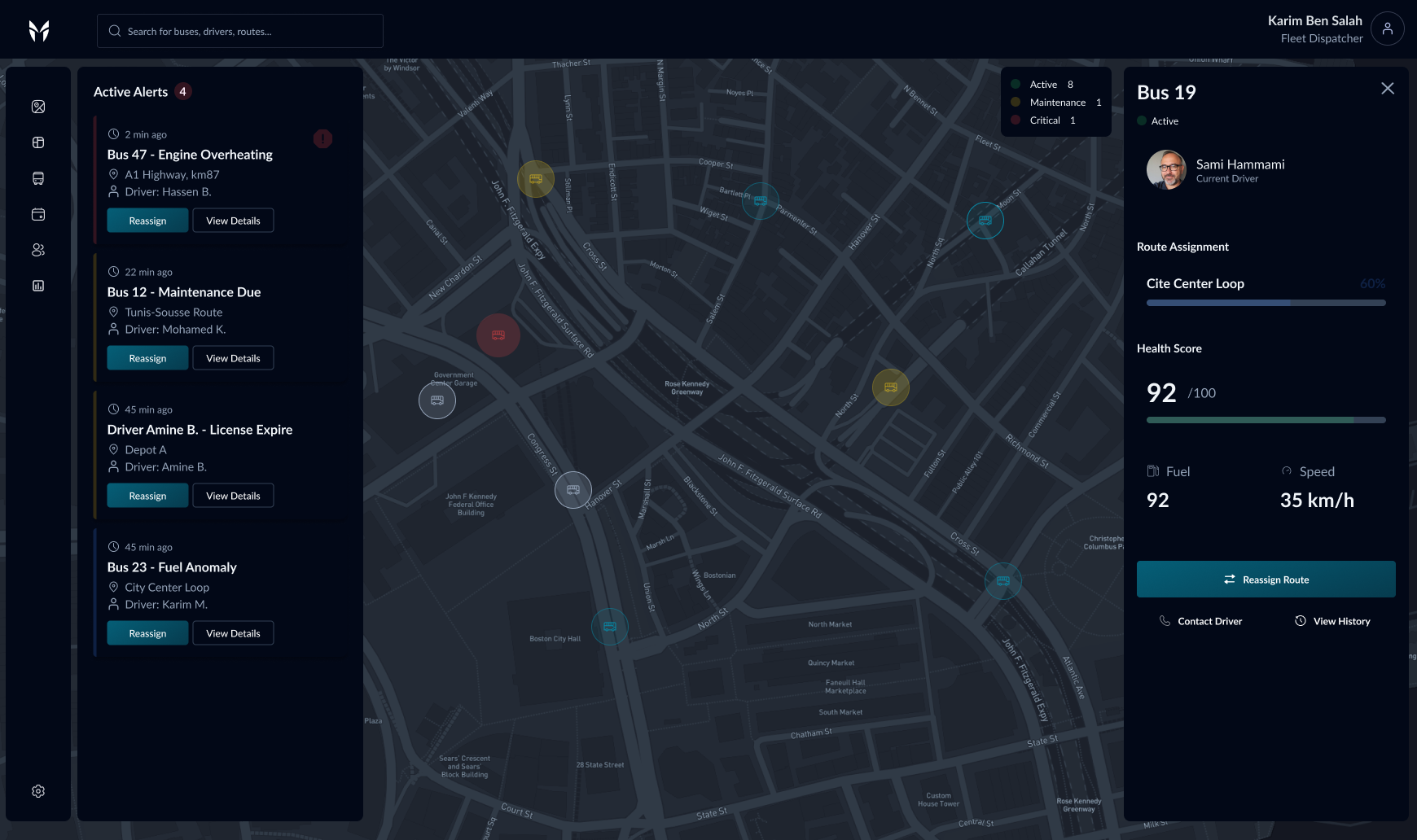
Live Map & Fleet Health
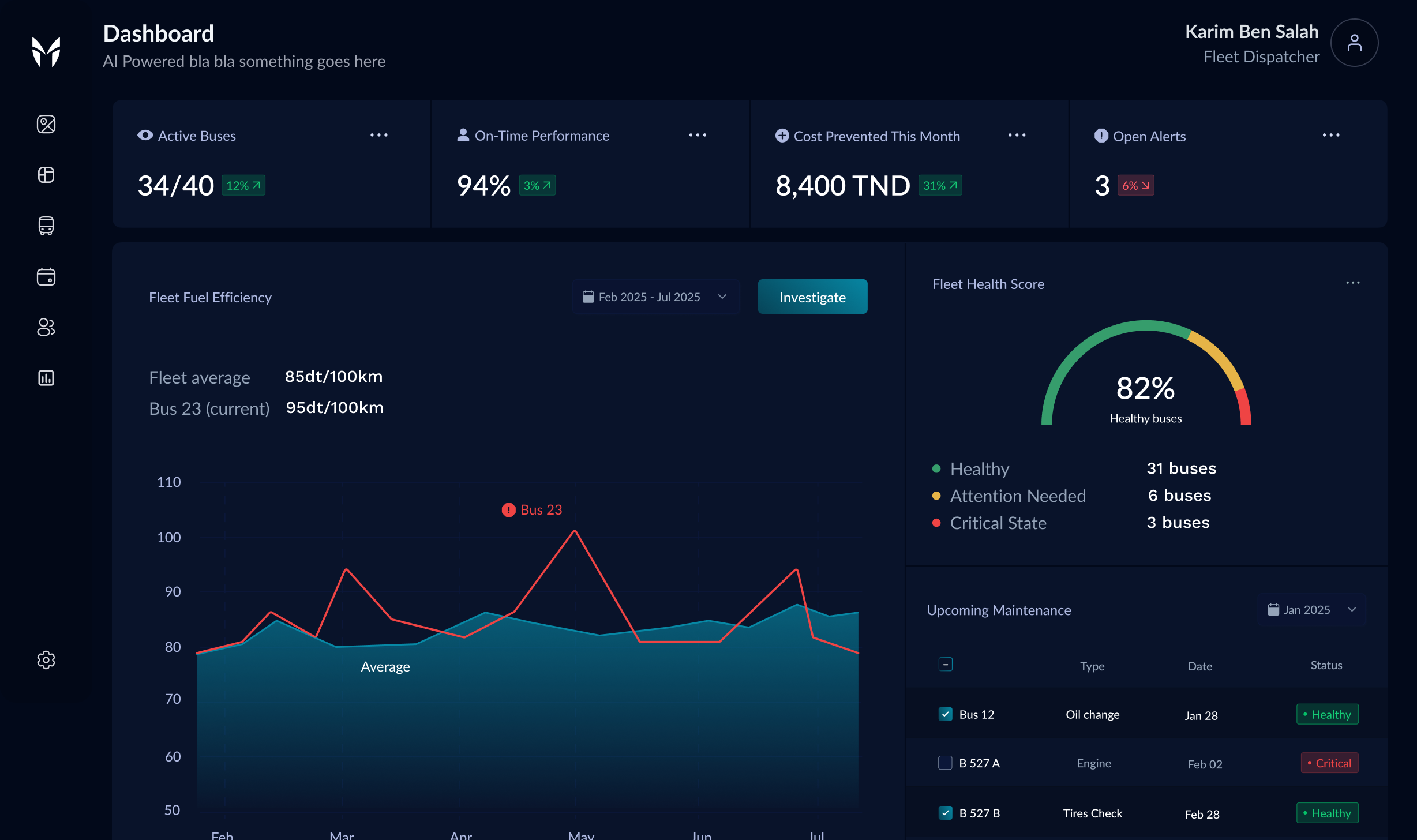
Monitor component wear in real time. The system forecasts failure probability with AI confidence, dynamically altering routes and notifying dispatchers to prioritize maintenance by risk before highway breakdowns occur.
Fuel Efficiency Audit - Bus 23
Fleet Fuel Efficiency
Track fuel consumption across every bus. The system automatically visualizes trends against expected baselines, allowing finance teams to catch sudden drops indicating theft, leaks, or engine inefficiency instantly.
Impact in Numbers
8min
Handoff Time
(76% Faster paper-based)
62%
Faster Response Time
To crisis events
+57%
Overall Efficiency
Across fleet dispatch
18%
Reduction in Fuel
Expenditure
40%
Decrease Breakdowns
Highway incidents
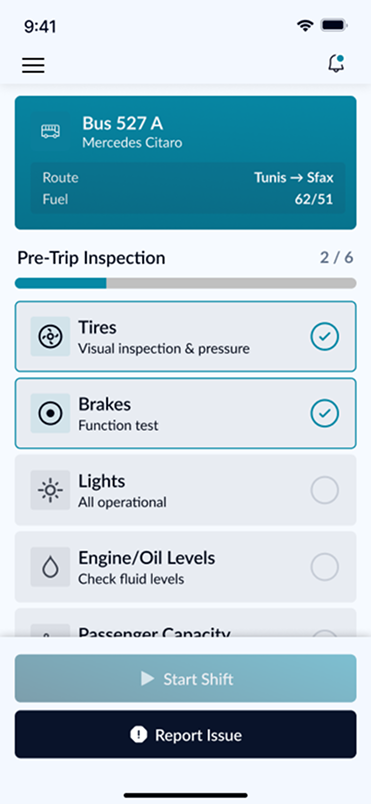
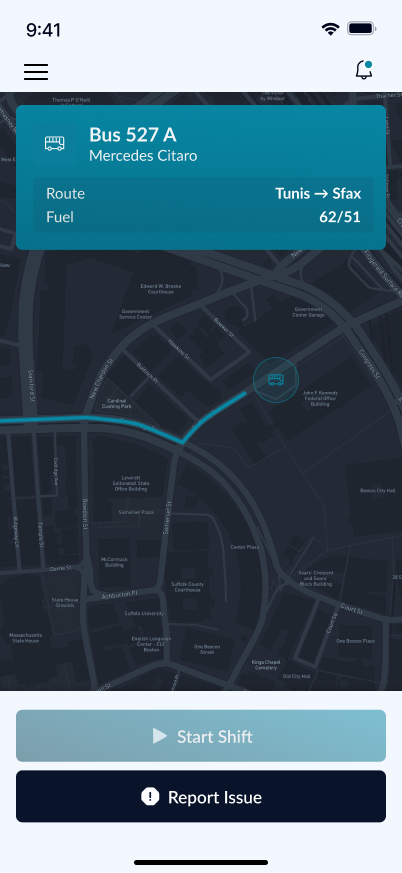
Masar Go Mobile App
Built for the driver's reality: 4G-constrained, high-vibration environments, gloves, and dead zones. It turns administrative hurdles into quick digital checks.
What I Learned
Designing Masar was a masterclass in reducing cognitive load under pressure.
When building for operational dispatchers, aesthetics matter far less than data hierarchy. The key realization was that dispatchers don't need more data; they need decisions teed up for them. By shifting the software from a "passive ledger" to an "active assistant" (AI confidence scores, auto-reassignment suggestions), we dramatically lowered their stress and hand-off times.
Furthermore, the necessity of the offline-first approach for Masar Go taught me to design for the worst-case scenario. Designing interfaces that remain fully functional without a 4G connection isn't just an engineering challenge; it requires specific UX framing to ensure the driver still feels confident the data is secure and will sync properly.